
News Category

Streetlights Trap Isopods in Mysterious “Death Spirals”

Streetlights Trap Isopods in Mysterious “Death Spirals”

7 May, 2026

In a world-first discovery, researchers have documented thousands of isopods abandoning their solitary lives to join massive, synchronized "death spirals" triggered by artificial streetlights. By experimenting with different light geometries, the team revealed how vertical beams of white light accidentally hijack the natural instincts of these crustaceans, trapping them in a mesmerizing but potentially dangerous circular march. This striking phenomenon highlights the hidden, unintended consequences of human light pollution on the secret lives of ground-dwelling wildlife.

What If the Brain Came First? Rethinking the Cambrian Explosion

What If the Brain Came First? Rethinking the Cambrian Explosion

5 May, 2026

For decades, scientists have wondered what triggered the sudden "explosion" of complex animal life on Earth. This new hypothesis suggests that the answer isn't found in shells or legs, but in the evolution of the brain as a response to an increasingly crowded and tiered ocean. By developing the genetic "blueprints" to organize a complex nervous system first, a few lucky lineages were able to recycle those same instructions to build the most diverse and sophisticated bodies in nature.


Kempner Institute for the Study of Natural and Artificial Intelligence at Harvard University and Edmond and Lily Safra Center for Brain Sciences (ELSC) at the Hebrew University Announce NeuroAI Collaboration

Kempner Institute for the Study of Natural and Artificial Intelligence at Harvard University and Edmond and Lily Safra Center for Brain Sciences (ELSC) at the Hebrew University Announce NeuroAI Collaboration

8 May, 2026

The Kempner Institute for the Study of Natural and Artificial Intelligence at Harvard University and the Edmond and Lily Safra Center for Brain Sciences (ELSC) at the Hebrew University of Jerusalem are pleased to announce a collaboration in NeuroAI, an emerging field at the intersection of neuroscience and artificial intelligence. 


Machneyuda Comes to Campus:  A New Food Truck on the Edmond J. Safra Campus

Machneyuda Comes to Campus: A New Food Truck on the Edmond J. Safra Campus

3 May, 2026

Special opening on Friday, May 8, during the University’s Open Day.


The Hebrew University of Jerusalem, in collaboration with the Machneyuda Group led by chefs Assaf Granit and Uri Navon, has launched “Hashafan” (“the rabbit”), a new food truck on the Edmond J. Safra Campus in Givat Ram.

Mothers’ Prenatal Immunity Shapes Lifelong Resistance to Gum Disease

Mothers’ Prenatal Immunity Shapes Lifelong Resistance to Gum Disease

29 April, 2026


Mothers provide a hidden immune legacy that protects their children's teeth long after weaning is over. A new study reveals how maternal antibodies act as early life architects, programming the mouth to resist aggressive bacteria and prevent the bone loss associated with adult gum disease. By setting a healthy immune tone before birth, these maternal defenses ensure that the foundation for a lifetime of oral health is laid from the very beginning.

Prestigious HFSP Grant Awarded to Hebrew University Researcher

Prestigious HFSP Grant Awarded to Hebrew University Researcher

23 April, 2026

Human Frontier Science Program Foundation (HFSP) has awarded a highly competitive international research grant to Prof. Orna Amster-Choder of The Hebrew University of Jerusalem, in collaboration with Prof. Kerwyn Casey Huang of Stanford University and Prof. Sivaramesh Wigneshweraraj of Imperial College London.


New Survey Finds Sharp Decline in Israelis’ Health Habits During the War

New Survey Finds Sharp Decline in Israelis’ Health Habits During the War

15 April, 2026

A new study examined the impact of the recent war with Iran on health behaviors, including nutrition, physical activity, smoking, sleep, and more. The research was conducted by a team from the “For a Change” Lab at the School of Public Policy at the Hebrew University, led by Dr. Roni Lotan and Prof. Eyal Peer, together with researcher Dana Roll.


Hebrew University Professors Hanah Margalit and Ilan Rosenshine Elected to the European Academy of Microbiology

Hebrew University Professors Hanah Margalit and Ilan Rosenshine Elected to the European Academy of Microbiology

15 April, 2026

The Hebrew University of Jerusalem congratulates Professors Hanah Margalit and Ilan Rosenshine on their election as Fellows of the European Academy of Microbiology (EAM), a prestigious recognition of scientific excellence and global impact.


The EAM recently elected 95 new Fellows, honoring outstanding contributions across the breadth of microbiology—from fundamental discoveries to innovations addressing global challenges in health, environment, and biotechnology.

Researchers Find a New "Molecular Handle" to Build Complex Medicines

Researchers Find a New "Molecular Handle" to Build Complex Medicines

13 April, 2026

In the high-stakes world of drug discovery, building a new medicine is a lot like microscopic architecture. To create the next breakthrough antibiotic or brain-targeting therapy, chemists must snap together fragile molecular building blocks. But for decades, one of the most useful chemical pieces has been notoriously stubborn, requiring conditions so harsh they often destroy the very medicine being built. Now, researchers have found a way to pick the lock.


COVID-19’s Lingering Shadow: New Study Uncovers Molecular Link Between SARS-CoV-2 and Lung Cancer Risk

COVID-19’s Lingering Shadow: New Study Uncovers Molecular Link Between SARS-CoV-2 and Lung Cancer Risk

10 April, 2026

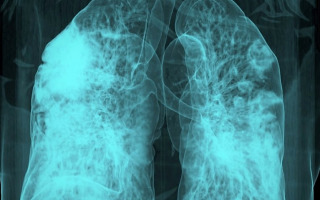
New study suggests that COVID-19 may slightly increase the risk of lung cancer by triggering a biological chain reaction in the lungs, driven by the virus’s spike protein, that promotes inflammation, scarring, and tumor-friendly conditions, especially in higher-risk groups like smokers; while the individual risk remains small, the findings are important because they reveal a plausible mechanism and potential targets for prevention and treatment.